
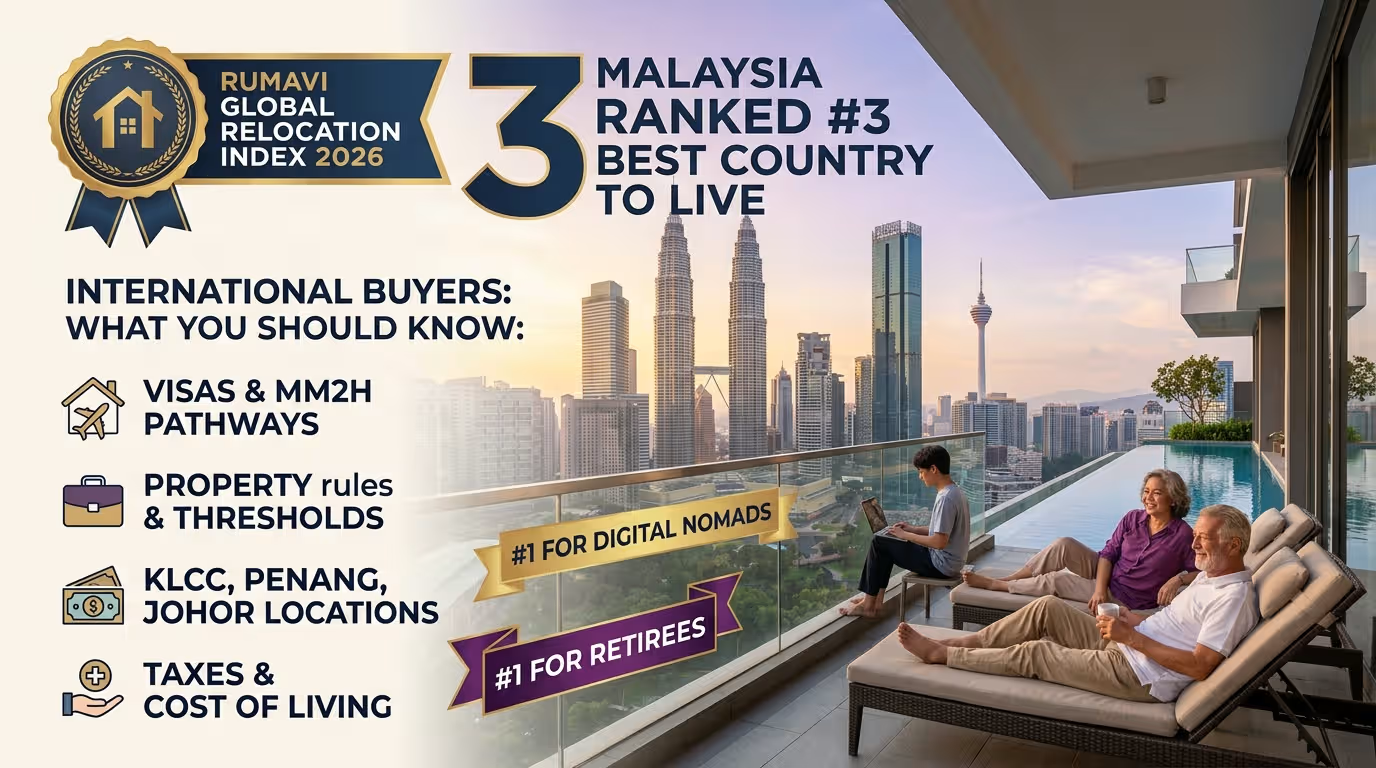
Malaysia Ranked #3 Best Country to Live in 2026: What International Property Buyers Should Know
Malaysia Ranks Third in 2026
According to the Rumavi Global Relocation Index 2026, Malaysia ranks third globally with an overall score of 72.0 out of 100. The index assesses 192 countries using 24 indicators across affordability, taxation, healthcare, infrastructure, safety, stability, settlement and opportunity.
Malaysia offers a combination that is difficult to find elsewhere: relatively affordable living costs, modern urban infrastructure, English access in major cities, international healthcare, diverse food and cultural experiences, attractive residential property choices and access to regional business and travel hubs.
#1 Estonia — 72.8 · #2 Singapore — 72.6 · #3 Malaysia — 72.0
97.8 — Malaysia’s general affordability score in the Rumavi index
#1 — Malaysia’s global ranking for digital nomads (79.1)
#1 — Malaysia’s global ranking for retirees (75.8)
192 countries — assessed across 24 indicators including affordability, healthcare, infrastructure, safety and opportunity
Why Malaysia Ranks Highly
Affordable cost of living
Affordability is one of Malaysia’s strongest advantages. Rumavi gives Malaysia a general affordability score of 97.8, making it particularly attractive to people bringing foreign income, savings or retirement funds into the country. International buyers may find that their budget provides access to larger homes, prime-city residences, private healthcare, international dining and lifestyle amenities — all at a lower cost than in many developed markets.
The actual cost of living depends on location and lifestyle. A buyer living in Kuala Lumpur City Centre, Bukit Bintang or a premium development may spend considerably more than someone in a suburban or smaller-city location.
Strong digital infrastructure
Malaysia ranks first globally for digital nomads in the Rumavi index, with a score of 79.1. This is relevant to remote professionals, online business owners, consultants, entrepreneurs and freelancers. Kuala Lumpur is especially attractive to remote workers who want access to modern residences, cafés, co-working spaces, restaurants, shopping malls, airports and private hospitals.
Digital connectivity alone, however, does not determine whether a buyer should purchase property. The buyer should also assess internet reliability in the specific building, mobile coverage, backup power, building management, home-office space, noise levels, nearby amenities, convenience, visa, tax eligibility and etc.
Attractive retirement environment
Malaysia ranks first for retirees in the Rumavi index, scoring 75.8. The country appeals because of relatively affordable daily expenses, private healthcare options, international airports, warm climate, English accessibility, diverse food and lifestyle choices and residential properties suitable for long-term living.
Popular retirement locations include Kuala Lumpur, Penang, Johor, Ipoh and selected coastal destinations. Each offers a different balance of healthcare, transport, climate, community, amenities and property prices. Retirees should not choose a property based only on a national ranking — they should first identify their preferred lifestyle: city-centre convenience, beach and island living, heritage surroundings, golf and resort living, quiet suburban neighbourhoods or proximity to hospitals and airports.
International healthcare access
Malaysia receives a healthcare quality score of 71 in the Rumavi country profile. Major urban centres offer private hospitals and specialist medical services that are attractive to international residents. Kuala Lumpur, Petaling Jaya and Penang are particularly relevant for buyers who want access to established private healthcare networks. When evaluating a property, international buyers should consider hospital distance, emergency response time, transport convenience and whether the preferred hospital accepts their insurance provider.
Distance to Hospitals
Check proximity to reputable private hospitals and specialist clinics.
Emergency Access
Assess emergency response time and transport convenience to medical centres.
Insurance
Verify medical insurance acceptance and provider networks before purchasing.
Malaysia by Buyer Profile
Malaysia performs differently depending on the type of person relocating. An international property buyer should not rely on a single overall score.
| Buyer or Resident Profile | Rumavi Position | What It May Mean |
|---|---|---|
| Digital Nomads | #1 | Strong affordability, connectivity and remote-work appeal |
| Retirees | #1 | Attractive lifestyle, healthcare and foreign-income profile |
| Families | #7 | Good potential, but school costs and location matter |
| Tax Friendliness | #12 | Potentially favourable, but personal tax advice is essential |
| Entrepreneurs | #37 | Lifestyle may be attractive, but business opportunity is more mixed |
| Overall Ranking | #3 | Strong general relocation profile, subject to personal circumstances |
Best Malaysian Locations for International Buyers
Kuala Lumpur City Centre
KL City Centre is suitable for buyers seeking high-rise luxury residences, corporate accessibility, shopping and dining, international hotels, private hospitals, public transport and walkable urban amenities. Areas such as KLCC, Bukit Bintang and the Tun Razak Exchange appeal to buyers who want a central city lifestyle and access to premium residential developments.
Mont Kiara and Desa ParkCity
Mont Kiara is well known among international residents and families, offering condominiums, international schools, restaurants and expatriate-oriented amenities. Desa ParkCity is popular with buyers seeking a more community-oriented environment, green spaces, retail facilities and family-friendly surroundings.
Penang
Penang may suit buyers who value heritage and culture, food, coastal lifestyle, healthcare, international communities and a slower pace of living. Buyers should distinguish between Penang Island and the mainland because property prices, commuting patterns and foreign-purchase requirements can differ.
Johor Bahru
Johor Bahru may appeal to Singapore-linked buyers, cross-border workers, investors studying the Johor-Singapore economic corridor and buyers seeking larger properties than those available in Singapore. Travel time, border congestion and the precise location of the property should be assessed before purchase.
Selangor
Selangor offers a wide range of suburban residential options, including condominiums, gated communities and landed developments. It may suit families seeking more living space, international schools, shopping malls, hospitals and suburban amenities. Foreign buyers must pay particular attention to Selangor’s state-specific purchase thresholds and property restrictions.
Can Foreigners Buy Property in Malaysia?
Yes, foreigners can generally buy certain Malaysian properties, subject to state rules, minimum purchase prices, property restrictions and approval requirements. There is no single nationwide rule that applies identically to every property. Requirements may vary according to state, district, property type, strata or individual title, new project or subsale property, residential or commercial classification, foreign-purchase restrictions and State Authority consent.
Current published market guides commonly report a minimum threshold of about RM1 million for many Kuala Lumpur residential purchases, while Selangor and other locations may have different thresholds. Foreign buyers should confirm the current requirements with a Malaysian conveyancing lawyer, the relevant state authority and the appointed real estate professional before signing a sale and purchase agreement.
Malay Reserve land · Bumiputera-restricted units · Low-cost or affordable housing · Certain agricultural land · Properties below the applicable state threshold · Developments with specific title restrictions
The buyer should never rely solely on an online article or verbal assumption. The title, category of land, purchase price and state consent position should be verified for the specific property.
Does Buying Property Give You Residency?
No. Buying Malaysian property does not automatically provide permanent residency, citizenship or the right to work in Malaysia. Visa and residence programmes, including Malaysia My Second Home and digital-nomad-related pathways, have their own requirements involving age, income, fixed deposits, medical requirements, insurance, dependants, duration of stay and programme conditions.
Visa rules can change, so buyers should obtain current advice from the relevant Malaysian authority or a qualified immigration adviser. A property purchase and a residence application should be treated as two related but separate matters.
What the Ranking Does Not Tell You
The Rumavi ranking is useful at national level, but it does not tell a buyer whether a particular condominium is well managed, whether a building has high maintenance fees, whether the neighbourhood is noisy, whether traffic will affect daily life, whether the unit has good rental demand, whether a school is suitable for the buyer’s children, whether a property has title or approval issues, whether a foreign buyer qualifies to purchase it, whether the property is suitable for long-term capital growth or whether the buyer’s visa application will be approved.
Rumavi gives Malaysia a street-safety score of 52, rule-of-law score of 57 and business-opportunity score of 39. These figures demonstrate why a balanced article should discuss both Malaysia’s advantages and its limitations.
Location Research
Visit the neighbourhood at different times of day and assess traffic, noise and amenities.
Legal Due Diligence
Engage a real estate agent or conveyancing lawyer to verify title, restrictions and State Authority consent.
Building Inspection
Assess maintenance, management quality, sinking fund and common facilities.
Exit Strategy
Plan your holding period, rental assumptions and resale strategy before purchasing.
Malaysia Compared with Singapore
Singapore ranks second in the Rumavi 2026 overall list with a score of 72.6, just above Malaysia’s 72.0. Singapore may appeal to buyers who prioritise global business connectivity, highly developed infrastructure, strong institutional systems, international education and premium employment opportunities.
Malaysia may appeal to buyers who prioritise lower living costs, larger residential spaces, more varied property choices, a relaxed lifestyle, regional connectivity and value relative to Singapore. The right choice depends on the buyer’s purpose. A Singapore-linked buyer may live, work or educate children in Singapore while considering Malaysia for a second home, retirement base or investment property.
Is Malaysia Right for You?
Malaysia may be suitable if you are a retiree with overseas income, a digital nomad seeking an affordable Asian base, a family looking for international schools and private healthcare, a Singapore-linked buyer seeking more residential space, an investor seeking a lifestyle-oriented property or an international buyer interested in Kuala Lumpur or Penang.
You should conduct additional research if you require unrestricted landed-property ownership, need to work immediately without confirming visa eligibility or working permit, expect property ownership to provide residency or MM2H, need highly specialised business opportunities, require a specific school or hospital for you and your family members, are purchasing primarily for short-term rental returns or have a budget below the applicable foreign-purchase threshold.
International Buyer Checklist
| Before Buying | Obtain Advice On |
|---|---|
| ☐ Your nationality | ☐ Each State’s minimum purchase price |
| ☐ Your purpose for buying | ☐ Each State’s Authority consent |
| ☐ Your intended period of stay | ☐ Stamp duty and transaction costs |
| ☐ Your preferred Malaysian city | ☐ Legal fees |
| ☐ Your total budget | ☐ Maintenance charges |
| ☐ Your financing position | ☐ Property taxes |
| ☐ Your intended property type | ☐ Rental regulations |
| ☐ Your visa or residence pathway | ☐ Foreign exchange considerations |
| ☐ Your tax-residency position | ☐ Sale and repatriation procedures |
Frequently Asked Questions
Is Malaysia the third-best country to live in 2026?
Why is Malaysia attractive to international buyers?
Is Malaysia good for digital nomads?
Is Malaysia good for retirees?
Can foreigners buy property in Malaysia?
Does buying property give foreigners Malaysian residency?
What is the minimum property price for foreigners in Malaysia?
Which Malaysian cities are popular with international property buyers?
Should international buyers invest in Malaysian property?
Sources: Rumavi Global Relocation Index 2026, EdgeProp. ~1,800 words. Last updated: September 2026.
Considering a Property Purchase in Malaysia?
Whether you’re a retiree, digital nomad, family or investor, I can help you navigate Malaysia’s property rules, visa pathways and location choices. Tell me your nationality, preferred location and budget — I will share suitable options with a realistic assessment for your objectives.
Yeoh Boon Giap · REN77901 · PropNex Malaysia