
Kuala Lumpur city centre (KLCC, Bukit Bintang, TRX belt, and KL Sentral/Brickfields) is evolving into a mature rental market with growing end‑user demand, rising short‑stay tourism, and clearer regulations. For international buyers and high‑net‑worth Malaysians, understanding rental performance, tenant profiles, and policy direction is now essential before committing to a multimillion‑ringgit condo.
This guide breaks down the latest trends so you can assess if a KL city centre property fits your portfolio strategy.
1. Why focus on rental in KL city centre?
KL city centre remains the most liquid and visible part of Malaysia’s residential market. For global and affluent local investors, it offers three key advantages:
- Deep tenant pool: Professionals, expatriates, students in international institutions, medical tourists and medium‑term corporate tenants create consistent demand for high‑rise units around KLCC, Bukit Bintang, TRX and KL Sentral.
- Tourism and short‑stays: Kuala Lumpur is one of Southeast Asia’s most visited cities on platforms like Airbnb; guest spending in KL alone was estimated at around RM4.4 billion in 2024, supporting over 20,000 jobs, which indirectly sustains rental demand for centrally located apartments.
- Global pricing gap: Even with Malaysia’s recent recovery, prime KL condo prices remain significantly below those in Singapore, Hong Kong or Tokyo, allowing yield‑focused investors to secure larger, higher‑spec units for the same capital outlay.
For international and High Net worth buyers, this combination of income potential and relative value makes KL city centre a compelling diversification play.
2. Rental performance: how is KL city centre really doing?
City‑wide trends
- Market insights for 2025 show Kuala Lumpur residential rents growing in the mid‑single digits, with some reports citing around 6% year‑on‑year rental growth and a positive quarter‑on‑quarter trend in early 2025.
- These rental gains outpace many secondary cities in Malaysia and reflect stronger job growth, urban amenities and infrastructure concentration in Greater KL.
Prime city centre pockets
Within the city, not all locations are equal. The following pockets typically command higher psf rents and stronger tenant demand:
- KLCC: Luxury and branded residences serving expatriates, C‑suite tenants and high‑budget medium‑term stays.
- Bukit Bintang / Pavilion area: Lifestyle‑driven rentals for executives, digital nomads and tourists who want walkable access to shopping, F&B and nightlife.
- TRX vicinity & Jalan Tun Razak corridor: Growing demand from finance and professional services as TRX positions itself as an international financial district. This will include students with their family members who wanted study in Monash university in the very near foreseeable future.
- KL Sentral / Brickfields: Transit‑oriented rentals for commuters and regional business travellers connected via rail and airport links.
These micro‑locations benefit directly from:
- Proximity to Grade‑A offices, international schools and medical facilities.
- Direct MRT/LRT/Monorail connectivity and easy airport access.
For investors, this translates into better occupancy resilience and stronger negotiation power on renewals compared to peripheral areas.
3. Tenant profiles: who is renting in KL city centre?
Understanding who your tenant is helps you choose the right product and furnishing level. In KL city centre, typical tenant segments include:
- Expatriate professionals and executives: Often on housing allowances, they prioritize security, facilities, international schools and proximity to offices, especially around KLCC, TRX and KL Sentral.
- Affluent local professionals and high‑income Malaysians: Using city units as a primary residence or weekday “work pad” near Central Business Districts, especially in premium condos and serviced apartments.
- Medium‑term corporate tenants and project teams: Renting for 3–12 months, often in fully furnished 1–3 bedroom units close to transit and business hubs.
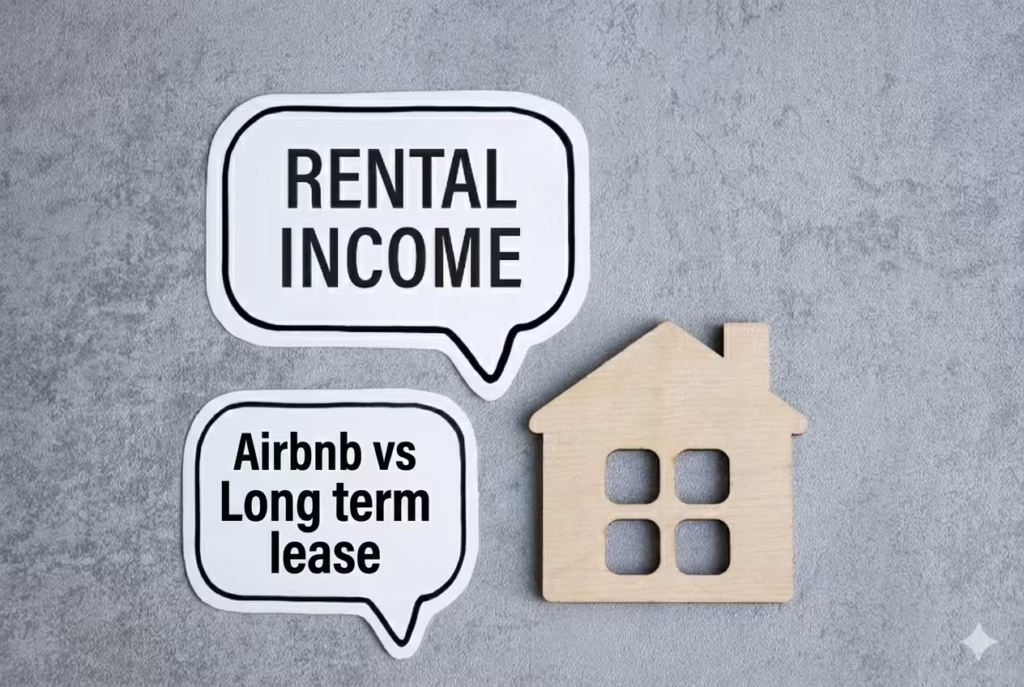
- Tourists and digital nomads (via Short Term Rent / Airbnb‑type platforms): Concentrated in Bukit Bintang, KLCC fringe and selected STR‑friendly buildings, staying from a few nights to a few weeks.
This multi‑segment demand gives landlords optionality: you can structure your asset as a long‑term lease, a mid‑term corporate unit, or, where legally allowed, a licensed short‑stay / hybrid model.
4. Short‑term rentals and Airbnb: impact on rental strategy
Airbnb and similar platforms play a growing role in the rental ecosystem, especially in central KL.
Economic footprint of Airbnb
- Airbnb‑linked spending in Malaysia in 2024 reached around RM11 billion, of which RM9.2 billion contributed to GDP and 93,600 jobs were supported.
- Kuala Lumpur captured about RM4.4 billion of Airbnb guest spending (roughly 39% of national total), supporting an estimated 20,300 jobs and RM612 million in wages—a significant share of the city’s tourism‑related economy.
For KL condo owners, this translates into:
- Strong demand for well‑located units that can cater to short‑stay and medium‑stay guests.
- More professional competition, as operators and RE‑savvy owners refine pricing, quality and guest experience.
Regulatory direction

Malaysia is not banning Airbnb‑style rentals, but moving towards formal STRA (Short‑Term Rental Accommodation) licensing:
- A national STRA framework is being prepared that will require hosts to obtain business licences from local councils and register units as tourist accommodation, especially in major destinations like Kuala Lumpur.
- Planned amendments to the Tourism Industry Act 1992 are expected to cover licensing, enforcement, data reporting and a Tourism Tribunal to manage disputes.
- A 2025 Court of Appeal ruling confirmed that strata owners must respect federal STR guidelines and any valid Management Corporation (MC/JMB) by‑laws, giving buildings legal backing to permit, restrict or shape short‑stay activity.
What this means for you:
- You should treat Short Term Rental investments as a regulated hospitality business, not informal subletting.
- Building‑level rules and land use (residential vs commercial) are just as important as national law.
For high‑net‑worth and institutional investors, this greater clarity can be positive: regulation filters out casual hosts and supports higher quality, compliant inventory in city‑centre buildings.
5. Policy & tax: how Budget 2026 affects rental investors
Beyond rent and occupancy, taxation now plays a more visible role in your net returns.
- From 1 January 2026, stamp duty on residential property purchased by foreigners has effectively increased from 4% to up to 8%, significantly raising acquisition costs at higher price bands.
- Malaysian citizens still enjoy stamp‑duty exemptions for first‑home purchases up to RM500,000 until at least the end of 2027, keeping local owner‑occupier demand healthy in the mass market segment.
Implications for KL city‑centre rental investors:
- International buyers face higher entry costs, making long‑term hold and rental yield more important than ever.
- Domestic demand in affordable and mid‑market segments remains supported, indirectly stabilising the wider housing ecosystem that feeds into your tenant and demand base.
6. How international and High Net Worth Malaysians should evaluate KL rentals

When assessing KL city centre properties as rental investments in 2026, consider:
1. Asset type and micro‑location
- Focus on strata‑titled condos and serviced apartments near key nodes (KLCC, Bukit Bintang, TRX, KL Sentral) with strong historical rental demand.
- Prioritise projects with proven occupancy, quality management and good track records on maintenance; tenants and STR guests are increasingly review‑driven.
2. Building rules and Short Term Rental Agreement compatibility
- Confirm whether STR or holiday stays are allowed, restricted (30 days+ only), or prohibited through MC/JMB by‑laws and local council policies.
- If STR is not permitted, position the unit as a long‑term or corporate rental rather than forcing an STR model.
3. Realistic rental underwriting
- Use conservative assumptions for rent per sq ft and occupancy, based on current market comparables and expected mid‑single‑digit annual growth.
- Factor in: service charges, sinking fund, maintenance, property management, insurance, licensing (if STR), and taxes before concluding on net yield.
4. Investment horizon

- With higher stamp duty and maturing regulations, KL city‑centre rentals make the most sense for 5–10 year horizons where:
- Rental income covers costs and gradually grows.
- Long‑term capital appreciation and currency diversification become meaningful.
7. Is a KL city centre rental still worth it in 2026?
For the right buyer profile, the answer is yes—if you choose carefully and think professionally:
- International buyers gain exposure to a growing Asian capital with relatively low entry prices and a deep rental pool, but must accept higher transaction taxes and a more regulated STR environment.
- High‑net‑worth Malaysians can use KL city‑centre condos as both lifestyle assets (weekday homes, family city pads) and income generators, while leveraging better local financing and tax familiarity.
Kuala Lumpur city centre is no longer a speculative “flip” market; it is transitioning into a yield‑oriented, professionally managed rental ecosystem where regulatory clarity, building quality, and micro‑location drive outcomes.
If you are considering a KLCC, Bukit Bintang, TRX or KL Sentral property and want a personalised rental yield and strategy breakdown, this is exactly where a tailored consultation can turn these macro trends into numbers for your specific budget and risk profile.
Добрый день, перезвоните, пожалуйста или напишите
Мой тг: @MariyaShatovva
Мой вотсап: +79497939839
Добрый день,
@MariyaShatovva
Я не могу связаться с вами по номеру WhatsApp: +79497939839
Как я могу вам помочь?
Если вы хотите написать мне сообщение, перейдите по ссылке WhatsApp: wa.me/60192819882 или напишите на мой адрес электронной почты: ybgiap@propnex.com.my