
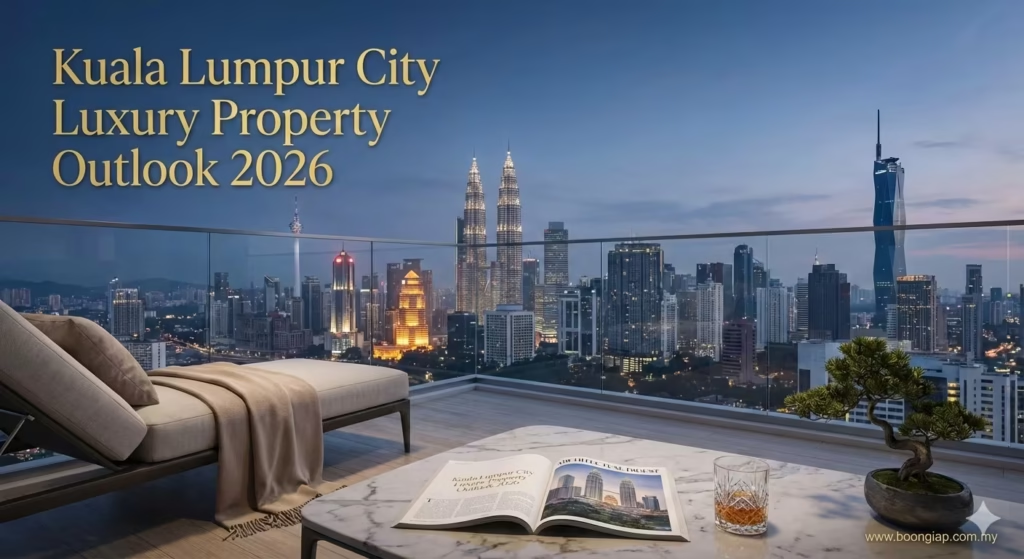
Malaysia’s economy is projected to grow at around 4.8–5% through 2025–2026, with fiscal consolidation and targeted subsidies keeping conditions broadly stable for property buyers. Government forecasts highlight a gradual easing of inflation and a focus on infrastructure, including rail, urban renewal and digital connectivity, all of which support medium‑term property values.
For the residential market, research houses and agencies describe a “selective” 2026 environment: buyers are more price‑conscious, but there is still strong appetite for well‑located, high‑quality projects near rail and job centres. This combination favours KL city centre developments with clear value drivers—especially those near KLCC, TRX and major MRT/LRT nodes.
Why KL city centre still anchors Malaysian wealth
Luxury condominiums in central Kuala Lumpur—particularly KLCC and the Golden Triangle—are priced well below equivalent segments in Singapore and Hong Kong, leaving a meaningful “value gap” for regional investors. High‑end units in core districts typically sit around USD 3,000–7,900 per square metre, versus roughly USD 19,000 in Singapore, even as infrastructure, lifestyle offerings and liveability continue to improve.
Gross rental yields for city‑centre luxury condos generally range around 4–5% per year, with slightly higher returns for well‑managed, branded or integrated developments near MRT interchanges and major malls. For high‑net‑worth Malaysians, these assets offer portfolio diversification and inflation protection; for international buyers, they represent a relatively affordable gateway into an emerging regional capital with solid long‑term fundamentals.
Infrastructure & catalysts reshaping KL’s prime zones

One clear 2026 theme is that infrastructure and catalytic projects are redefining where demand concentrates in the city.
- TRX (Tun Razak Exchange) has become a focal point for Grade A offices, The Exchange TRX mall and major financial tenants, with surrounding residential projects positioned to benefit from long‑term corporate and expat demand. The upcoming Monash University will be another driver.
- MRT and LRT integration via TRX, Bukit Bintang and Cochrane improves accessibility to KLCC and nearby neighbourhoods, supporting occupancy and rental resilience for projects within walking distance of stations.
- Urban renewal & ESG trends—such as green buildings, walkable precincts and integrated mixed‑use districts—are increasingly rewarded by both institutional and private capital, favouring well‑designed city projects over older stock.
For investors, the implication is clear: not all KLCC or “city centre” addresses are equal. Projects directly linked to MRT, malls and new economic clusters like TRX, KLCC, & Bukit Bintang are better placed to ride the next cycle than isolated developments.
Key high‑end hotspots: KLCC, Bukit Bintang, TRX & Bukit Ceylon

The most relevant 2026 hotspots are those where I already curate stock: KLCC, Bukit Bintang, TRX‑adjacent and nearby hilltop enclaves like Bukit Ceylon and Taman U‑Thant. www.boongiap.com.my
- KLCC & Petronas Towers precinct: Branded residences and top‑tier freehold condos continue to set the benchmark for prestige and liquidity, with strong interest from both locals and foreign buyers.
- Bukit Bintang & Golden Triangle: Ongoing improvements in pedestrian connectivity, mall offerings and public realm have turned the area into a genuine live‑shop‑play district, supporting both own‑stay and short‑/long‑stay rental demand.
- TRX & surrounds: TRX is consolidating as Malaysia’s financial hub, and the upcoming Monash University city campus in TRX is expected to add a powerful education driver to long‑term demand for nearby residences.
- Bukit Ceylon / Taman U‑Thant: These lower‑density hill and embassy enclaves appeal to families and expatriates who want space and greenery while staying within 10–15 minutes of KLCC and TRX.
Each of these micro‑markets offers a slightly different risk‑return profile. High‑net‑worth buyers can combine them within a single portfolio: for example, one KLCC trophy unit, a TRX‑adjacent investment apartment and an embassy‑row family residence.
What 2026 means for high‑net‑worth buyers

The 2026 outlook suggests a gradual firming of prices in quality segments rather than a speculative spike, with fewer new launches and more disciplined lending keeping the market in balance. With monetary policy expected to remain supportive and abundant liquidity reported in banking and capital markets, well‑located city properties should remain financeable and attractive as long‑term holdings.
For affluent Malaysians and international investors, the key shift is that selectivity has become a feature, not a bug: capital is flowing into projects that combine (1) strong location and connectivity, (2) credible developers and management, and (3) clear catalysts such as TRX, rail nodes or education anchors like Monash’s new campus. In this environment, Bukit Bintang as tourists hotspot will benefit from the Visit Malaysia 2026 Campaign, carefully chosen KL city centre properties can still deliver both lifestyle and investment outcomes—provided they are evaluated at unit level, not just district label.